Up to 20% off today!
Is Soya Bad for You? Truth vs. Myth Explained
Discover the truth behind common soya myths. Learn why whole soya is a clean, complete plant protein and how it can safely fit into your diet.
6/21/20262 min read
Truth vs. Myth: Is Soya Actually Bad for You?
If you look up "soya" on the internet today, you will find a dizzying amount of conflicting advice. On one side, wellness experts hail it as the ultimate plant-based protein. On the other side, fitness forums warn you to stay far away from it, claiming it messes with your health and hormones.
It is easily one of the most polarizing foods in the modern grocery aisle.
If you’ve been avoiding soya chunks, tofu, or edamame because of something you read online, it’s time to clear the air. Let’s look at the actual science and bust the two biggest misconceptions surrounding this humble bean.
Myth 1: "Soya causes hormonal imbalances and raises estrogen."
The Origin: This is the most common fear. People worry that eating soya will elevate estrogen levels, leading to unwanted side effects (especially for men).
The Reality: Soya contains natural plant compounds called phytoestrogens (specifically isoflavones). Because they share a vaguely similar chemical structure to human estrogen, people assume they act the exact same way. They don't. Phytoestrogens are incredibly weak—thousands of times weaker than human estrogen—and multiple global clinical studies have proven that moderate consumption of whole soya does not disrupt human hormone levels. In fact, for many women, these plant compounds actually help balance fluctuating hormones naturally.
Myth 2: "Soya is heavily processed and unnatural."
The Origin: People look at highly processed mock meats, soy isolates in protein powders, or soy lecithin used as a preservative in junk food, and label all soya as "unhealthy."
The Reality: It all comes down to form. Just like processed corn syrup is bad but a fresh corn on the cob is good, the same rule applies here. Traditional, whole forms of soya—like steamed edamame, traditional tofu, tempeh, and simple home-cooked soya chunks—are incredibly clean, unrefined foods that have been consumed safely for generations.
Why Soya Deserves a Place on Your Plate
When you strip away the internet myths, what you are left with is a nutritional powerhouse, especially for vegetarian and vegan diets:
A Complete Protein: Soya is one of the very few plant foods that contains all nine essential amino acids that your body cannot make on its own.
Heart Healthy: It is naturally cholesterol-free and low in saturated fat, making it an excellent alternative to heavy meats.
Affordable Nutrition: Unlike expensive imported health supplements, simple soya products offer massive nutritional value without breaking the bank.
The Key Takeaway
You don’t need to fear soya. Like everything else in nutrition, moderation and quality are what matter. Avoid hyper-processed fake meats with mile-long ingredient lists, and instead stick to clean, traditional, and whole food sources.
Craving a healthy crunch without the guilt?
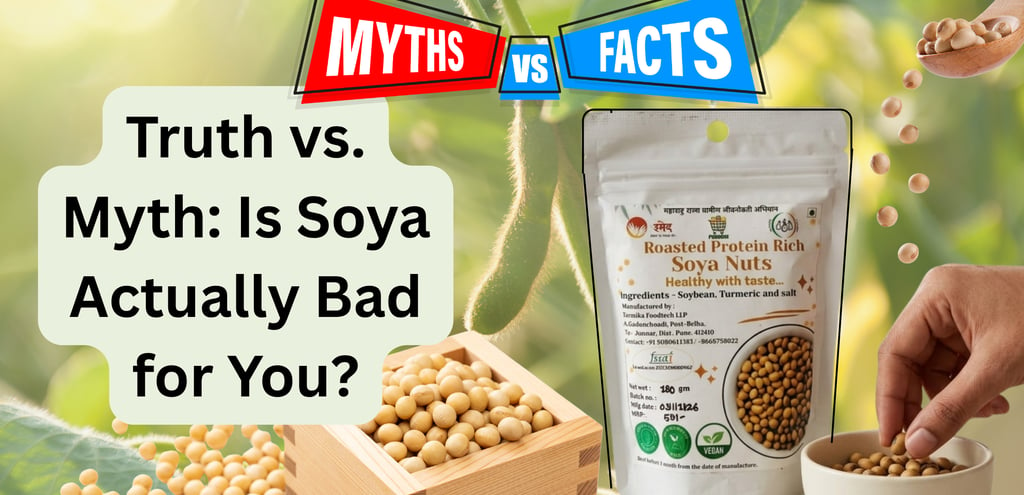
Getting high-quality plant protein into your day shouldn't feel like a chore—and it definitely shouldn't mean eating boring food. If you are looking for a delicious, whole-food way to enjoy the benefits of soya, we’ve got you covered. At Farmika, our roasted Soyanuts are crisp, intensely flavorful, and packed with all-natural protein and fiber. They are the perfect, mess-free afternoon snack to keep you full and energized without any of the artificial junk.
Brand
Explore our sleek website template for seamless navigation.
Contact
Newsletter
farmikafoodtech@gmail.com
+91 86687 58022
© 2025. All rights reserved.
Quick Links
Shop By Concern